Bruxel modules
Connect Bruxel with your store, your ERP and your other systems
Bruxel integrates through its public API, signed webhooks and a module for Adobe Commerce, so your systems read and write without anyone having to check in.
What it solves
A catalog that only lives on a screen forces someone to copy data between systems. With the API and webhooks, your store or your ERP finds out when something changes and reads the product as it is today.
- A REST API with per-organization keys, scoped permissions and idempotency on the operations that charge credits.
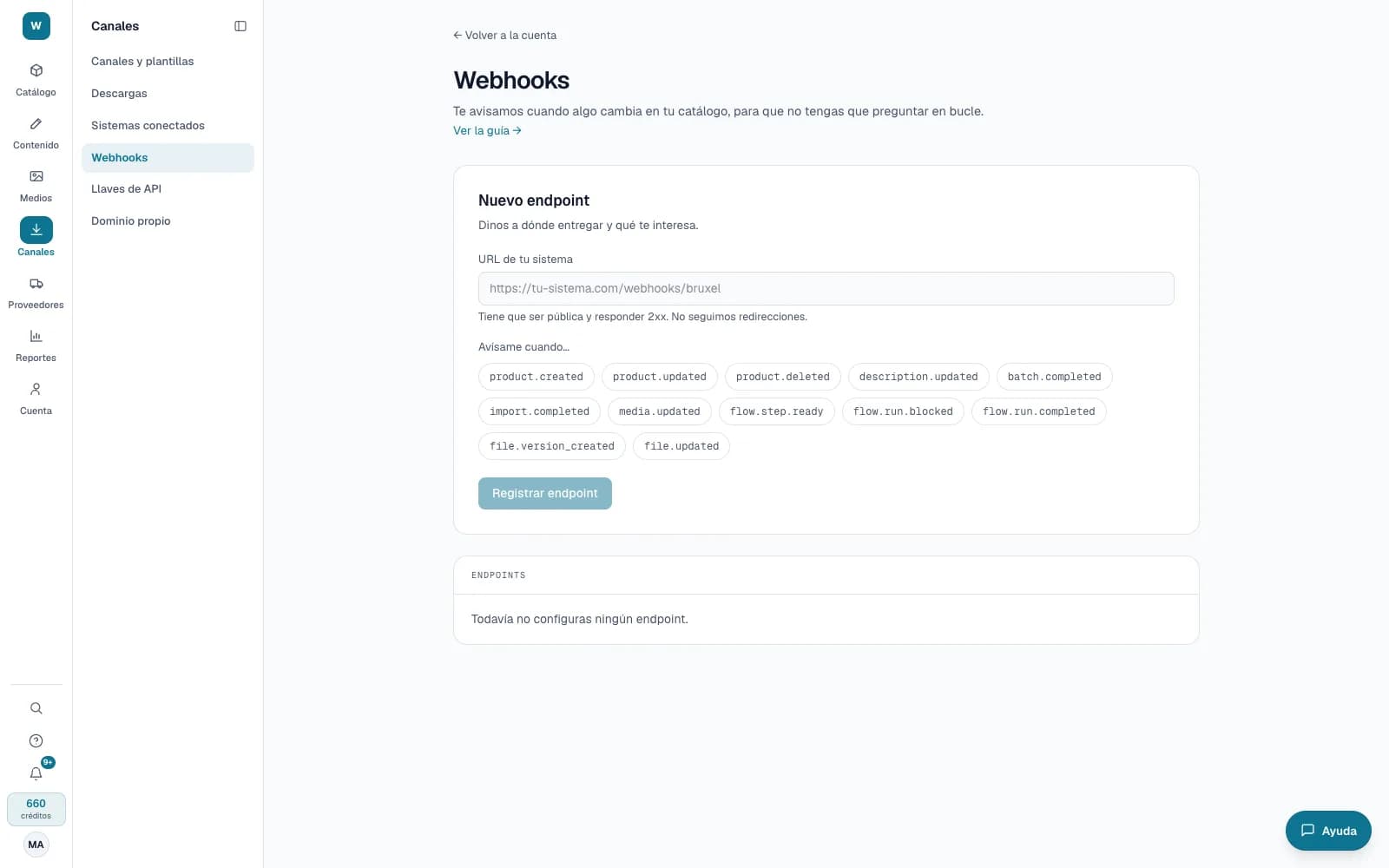
- Webhooks signed with a secret, with retries, a log of every delivery and “Resend”.
- Bruxel_Sync for Adobe Commerce and Magento Open Source 2.4.7 to 2.4.9: the store sends its products and Bruxel returns the published content, with a dry-run mode before writing.
What it looks like
Who it is for
- Technology teams that connect the catalog to their ERP, PLM or store.
- Adobe Commerce stores that want Bruxel's content on the product page.
- Companies that want their team and suppliers to sign in through their own subdomain, such as pim.yourcompany.com.
What it needs
- Creating API keys and webhooks is for administrators. The key and the secret are shown only once.
- The Adobe Commerce module is installed with Composer by someone with technical access to the store.
- A custom domain costs 100 credits a month and, for now, the Bruxel team sets it up.
Its guides
Connected systemsRegister the systems you operate with —your store, SAP, the warehouse, the ERP— with the key they call with and the endpoint Bruxel notifies, and check whether their channel is healthy.WebhooksHow to notify your store or ERP when something changes in Bruxel, without anyone having to check.Connect your Adobe Commerce storeThe Bruxel_Sync module keeps your Adobe Commerce catalog and your Bruxel content on the same page: the store sends the products, Bruxel returns the descriptions.Bruxel on your own domainYour team and your suppliers can sign in to Bruxel from an address of your company, like pim.yourcompany.com, with your logo on the sign-in page and the links in emails pointing there.
Read more: Bruxel integrations: public API, webhooks, Adobe Commerce and custom domain